
Stockinette for Wound Dressing Retention: Uses and Selection
Explore stockinette for wound-dressing retention, limb coverings and medical bandaging. Learn which component to specify and what to send a supplier.
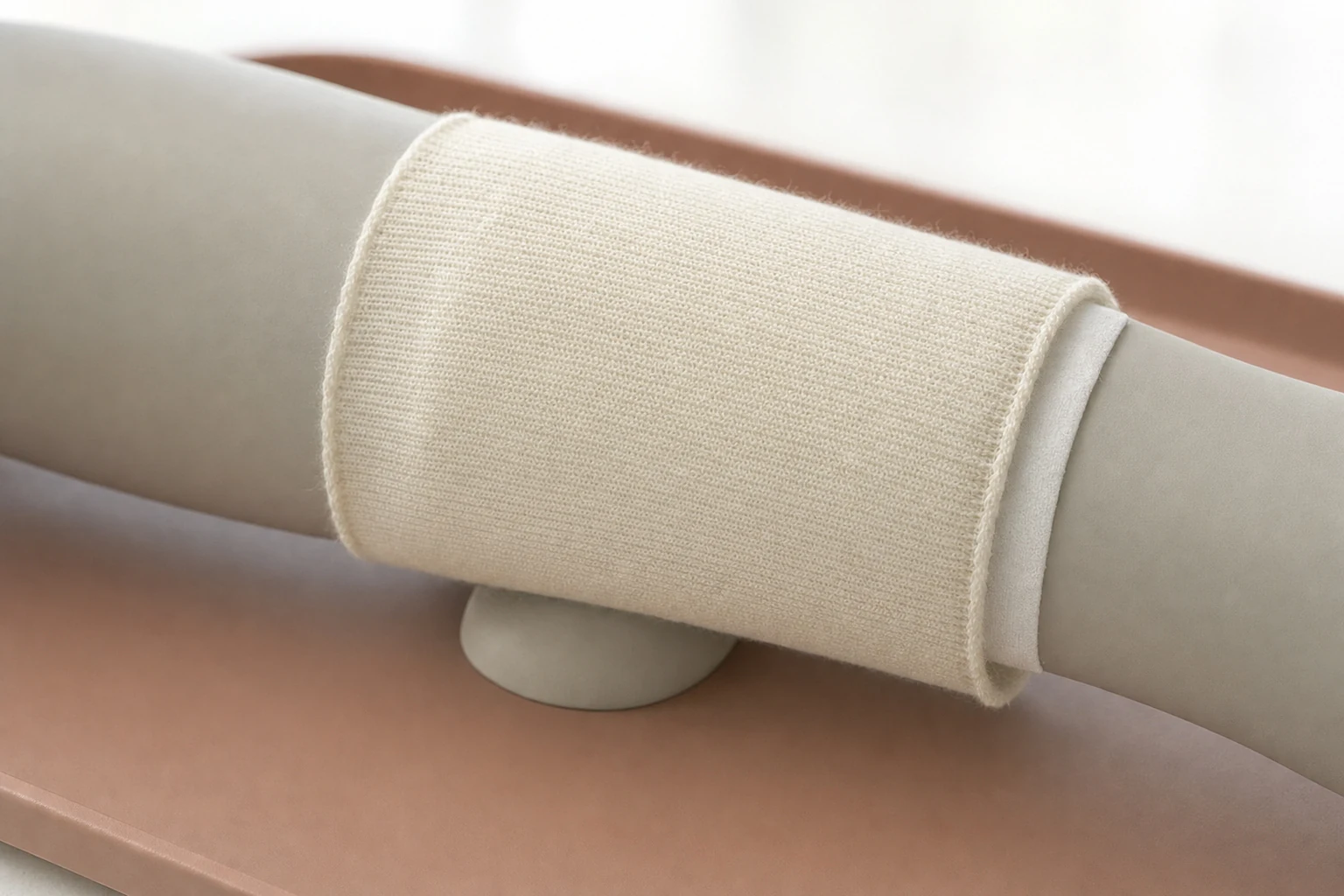
Stockinette used for wound-dressing retention is a tubular covering that helps keep a separate dressing in place. The phrase “wound wrapping” can also describe a rolled retention bandage, an underliner or a compression system. Identifying the intended component is the first step to choosing and sourcing the right product.
What does the stockinette do?
A dressing-retention tube provides a covering around the dressing arrangement. The NHS Borders wound-care formulary distinguishes tubular retention bandages from other bandaging products and notes that the listed retention stockinettes are not designed to manage wound fluid. Absorption and wound contact therefore need to be specified separately from retention.
When a customer asks for “stockinette to wrap a wound”, clarify whether they want the covering tube or the dressing itself. This prevents a supplier from quoting raw knitted fabric when the buyer expects a finished wound dressing. Patient use follows the selected product's instructions and the responsible healthcare professional's guidance.
Use case 1: holding a dressing on a limb
A medical-supply buyer may be sourcing a tubular covering for a dressing on an arm or leg. The tube needs to be evaluated over the intended dressing arrangement, not only against a bare measurement. Dressing bulk, the required coverage length and the product's construction belong in the buyer's specification.
For an enquiry, identify the product role as dressing retention and give the required material and measured dimensions. The buyer's clinical or product-development team should approve the proposed fit; a factory width range is not a patient-size recommendation.
Use case 2: retaining a dressing around a changing contour
Hands, feet and joints raise a different purchasing question from a straight fabric sample. The selected product must suit the intended shape and its instructions. During sample evaluation, record any bunching, edge roll, movement of the dressing or difficulty positioning the specified product. These observations help a supplier review the construction against a defined requirement.
Do not solve a mismatch by assuming more stretch, extra layers or tighter fabric will be better. Dressing retention and therapeutic compression are different functions. A request for either should say which function is intended.
Use case 3: stocking rolls for a wound-care range
Wholesalers and medical brands need repeatable stock items. Define the material, knit reference, measured width, length per roll and pack contents for each item. For a requested cut format, specify the length, edge finish and packaging and ask the factory to confirm availability.
A clear item description also helps compare quotations. “Tubular dressing-retention fabric, specification attached, quantity by size” is more precise than “medical cotton bandage”. Keep the approved sample reference with the purchase order so repeat deliveries can be assessed against the same product.
Stockinette, gauze, underliners and compression: what changes?
- Wound-contact or absorbent dressing: the product selected for contact with the wound and any fluid-management requirement. A generic stockinette tube should not be assumed to perform this role.
- Tubular dressing retainer: a tube intended to hold the separate dressing in position.
- Rolled retention bandage: a different physical format; ask for it explicitly rather than using “bandage” and “tube” interchangeably.
- Stockinette underliner: an interface component within a specified casting or multilayer bandaging system.
- Compression bandage: a product with its own performance specification and application instructions. An elastic yarn name is not a pressure rating.
The Leicestershire Partnership NHS Trust multilayer-bandaging leaflet separates the tubular layer, padding and compression bandage. For sourcing, list the component you actually need. See our underliner supply page or casting and splinting page when those are the intended uses.
Choosing cotton or an elasticated construction
Fibre and construction should be specified together. Tahir Collection manufactures cotton stockinette in the 2–40 cm range and elastic tubular bandage using spandex or rubber yarn. The intended product role determines which specification should be reviewed. Read the elastic stockinette uses guide for more on retention and support.
For medical orders, request the composition and documentation required for the exact grade, including any latex restriction or sterility requirement. Do not infer those properties from a white appearance or a cotton description. These materials are not presented as interchangeable with another manufacturer's finished clinical product.
Send a complete medical-supply enquiry
Include the intended use, product specification or sample reference, dimensions and measurement method, quantity, requested packing and destination. Tahir Collection offers flexible order quantities and a Certificate of Analysis per lot; additional finishing, packaging and documentation are confirmed for the enquiry.
Start with our wound-care and bandaging supply page or request a sample for your dressing-retention specification.